
· by Michael Blair, Nashville's Insulation
The three common insulations perform differently and suit different applications. Cost is the obvious difference and air sealing is the more important one.
Fiberglass
Cheapest, available as batts or blown. It insulates well when installed at full loft with no gaps and does nothing to stop air movement.
It is also the most commonly installed badly — compressed, cut short, or with gaps around wiring — which loses much of its rated performance.
Blown cellulose
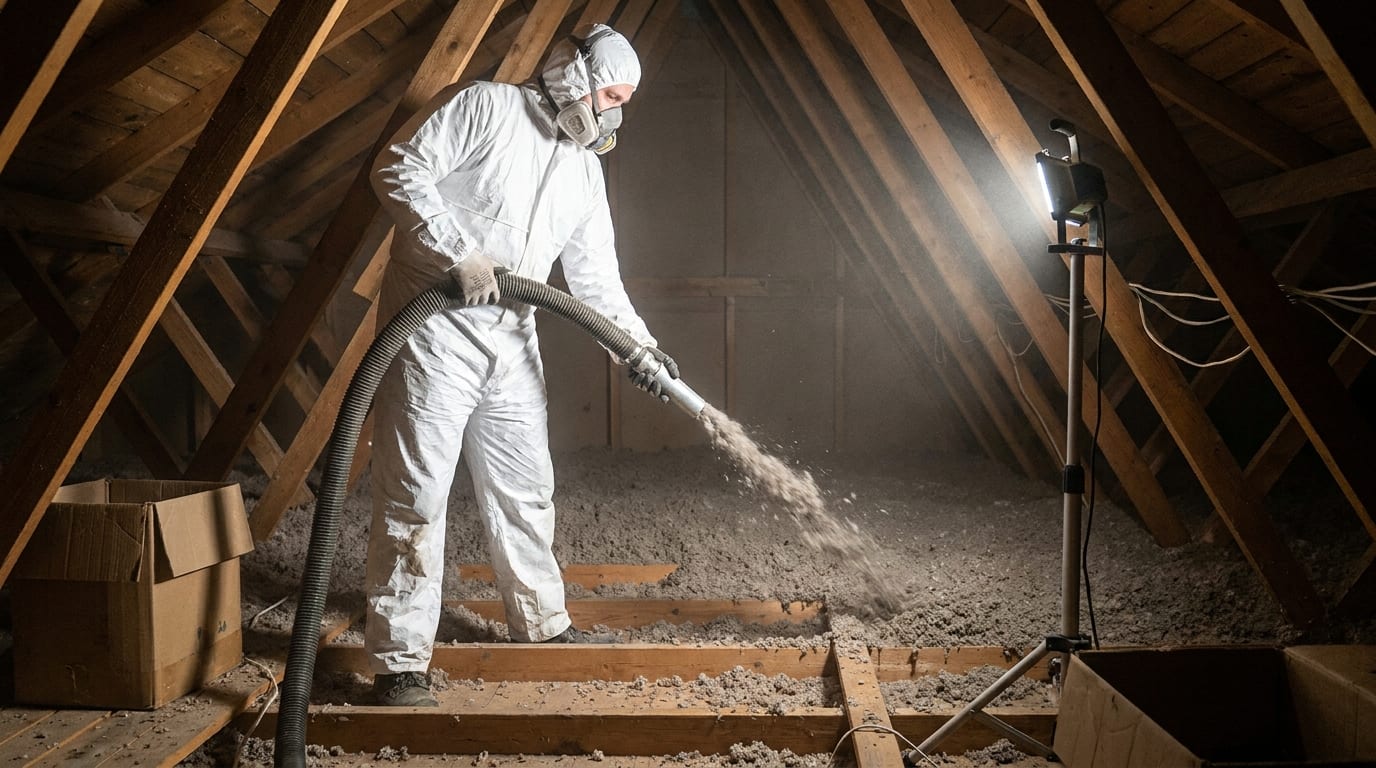
Recycled paper treated for fire resistance. It fills irregular cavities better than batts, has some air-sealing effect from its density, and is a good choice for topping up an attic.
It settles somewhat over time, which should be allowed for in the installed depth.
- Fiberglass: cheapest, no air sealing, easily installed badly
- Cellulose: fills irregular spaces, some air resistance, settles
- Open-cell foam: air seals, vapor permeable
- Closed-cell foam: air and vapor barrier, highest performance and cost
- Foam must not be applied over damp framing
Spray foam
Open-cell foam air seals and remains vapor permeable. Closed-cell adds a vapor barrier and structural rigidity, and performs best per inch.
Both air seal in a way the others do not, which in a leaky older Nashville house is often where most of the benefit lies.
Where foam needs care
It must not be applied over damp framing, it conceals the wood behind it from future inspection, and in an attic it changes the ventilation strategy entirely — a foamed roof deck creates an unvented assembly that must be designed as one.
It is a good product applied deliberately and a problem applied piecemeal.