
· by Michael Blair, Nashville's Insulation
Attic insulation is the highest-return efficiency work in most Nashville houses, and it only performs if the ceiling below it is sealed first.
Target depth
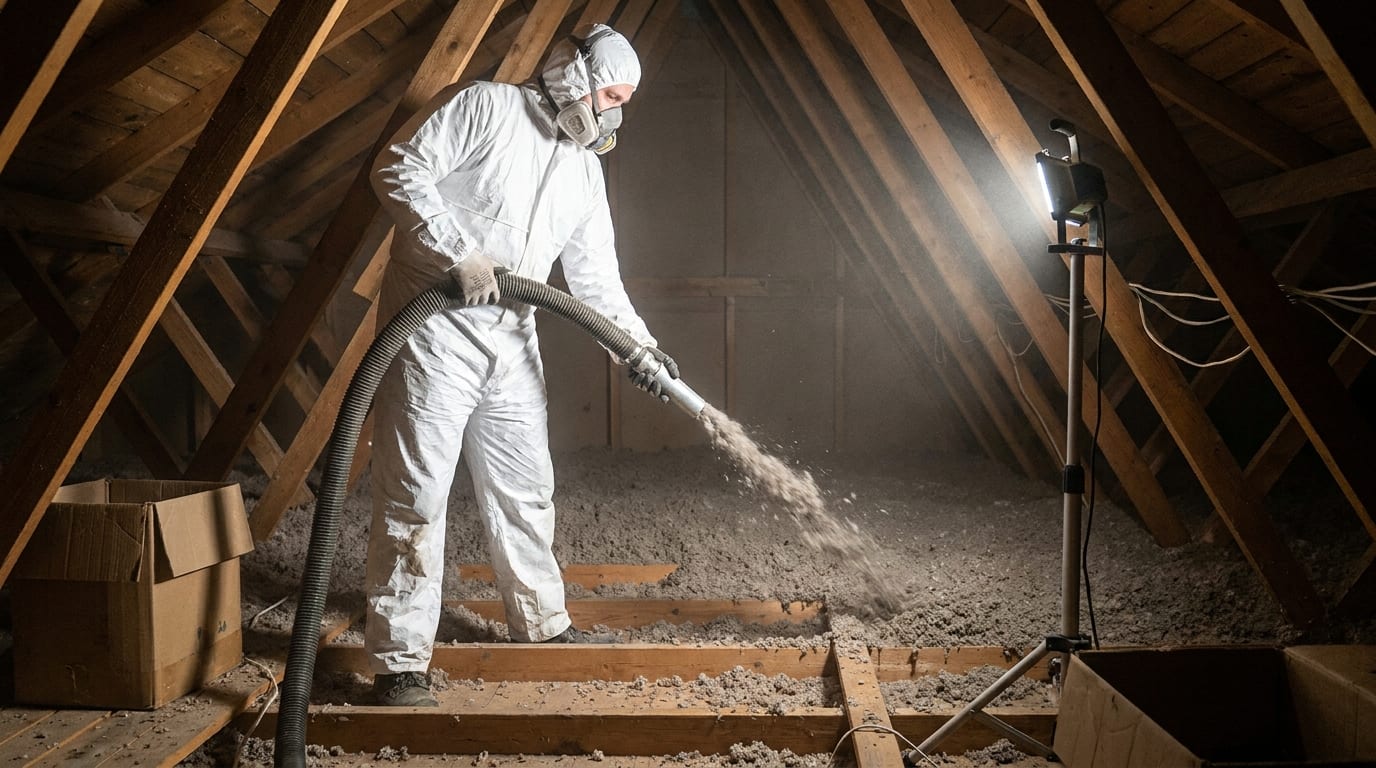
Current guidance for this climate zone puts attic insulation well above what most older houses have — typically a depth of blown insulation considerably deeper than the joists.
Insulation level in an existing house is easy to check: if you can see the tops of the joists, there is not enough.
Air sealing first
Insulation slows conduction; it does not stop air moving. Warm humid house air rising through gaps around light fittings, the attic hatch, plumbing penetrations and top plates carries far more energy than conduction does.
Sealing those first, then insulating over them, is the correct order and it is frequently skipped.
- Air seal penetrations before adding insulation
- Seal and insulate the attic hatch — a large uninsulated hole
- Baffles at the eaves so soffit vents stay clear
- Do not bury recessed lights unless they are rated for it
- Do not compress insulation; loft is what insulates
Do not block the ventilation
Blown insulation pushed into the eaves blocks soffit vents, which is one of the most common causes of a poorly ventilated attic in Middle Tennessee.
Baffles at each rafter bay hold the insulation back and keep the airway open. They cost very little and are routinely omitted.
What it does in summer
Attic insulation is usually sold on winter heating and matters at least as much here in summer, when an attic reaches well over a hundred degrees and that heat drives into the rooms below.
In a long Middle Tennessee cooling season, the payback is on both sides of the year.