
· by Michael Blair, Nashville's Insulation
Adding attic insulation is the standard energy improvement and it is routinely done in the wrong order. Insulation resists heat moving through a material. It does very little about air moving through gaps, and in most Nashville houses air movement is carrying a large share of the loss.
The difference between the two problems
Heat conduction is what insulation addresses, and R-value measures it. Air leakage is a separate mechanism: warm air rising and escaping through openings at the top of the house, drawing replacement air in through openings at the bottom. That is the stack effect and it runs continuously.
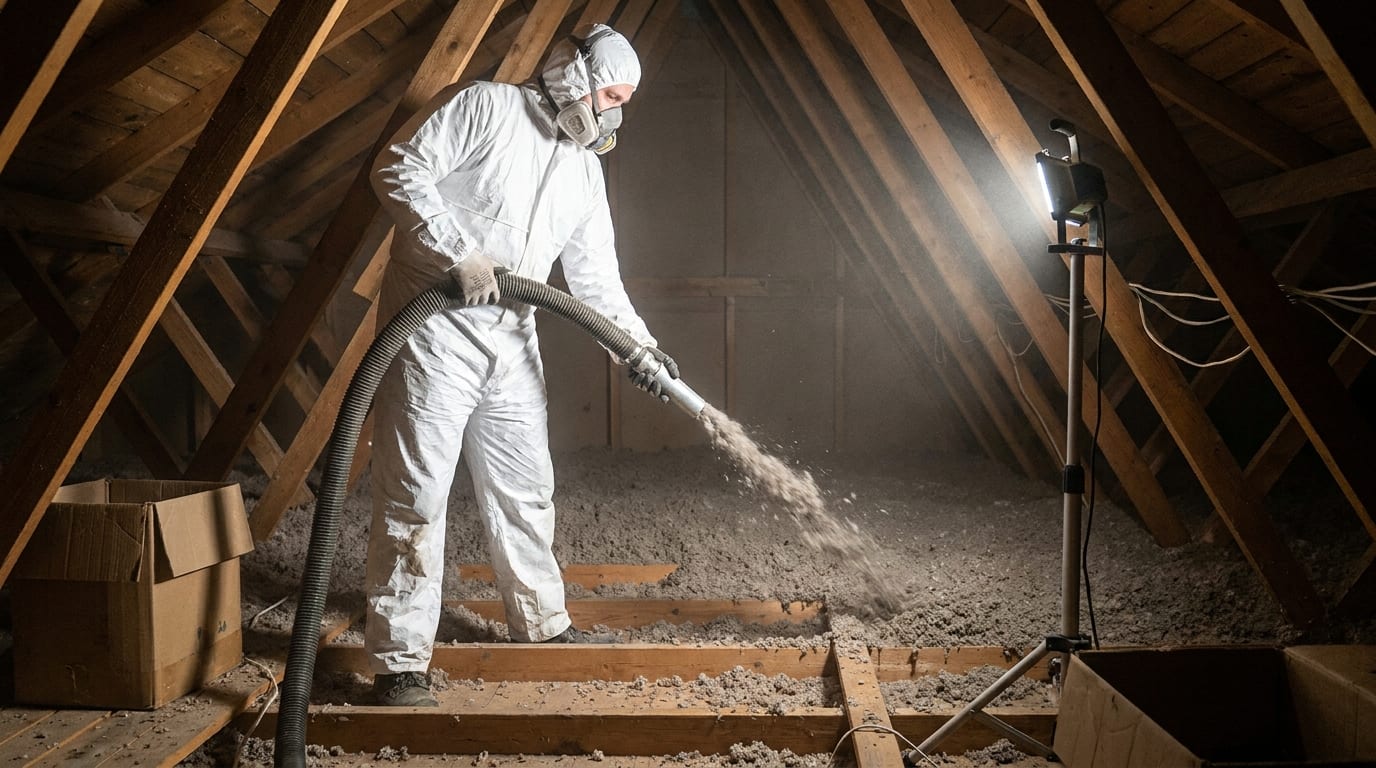
Fibrous insulation is air permeable. Blown cellulose or fiberglass laid over an open gap does not seal it; air moves through the material and out. What that produces is the common situation of an attic with plenty of insulation and a house that still feels drafty and expensive to heat.
Where the leaks are, in order
The top plates of interior walls, which are usually open into the wall cavities below and are the single largest leakage path in many houses. Around chimneys and flues, where a required clearance gap exists and must be sealed with metal and high-temperature sealant rather than foam.
Then plumbing and wiring penetrations, recessed light fittings, bath fan housings, dropped soffits over cabinets, and the attic hatch itself, which is often an uninsulated unweatherstripped panel sitting in a hole. Each is small; together they typically add up to something equivalent to leaving a window open.
- Open interior wall top plates
- Chimney and flue clearances, sealed with metal and fire-rated sealant
- Plumbing stacks, wiring holes and recessed lights
- Dropped soffits and bulkheads over kitchen cabinets
- The attic hatch, weatherstripped and insulated
Why it matters more in this climate
Air carries moisture, and Middle Tennessee air carries a great deal of it. In summer, humid air pulled into a cool house condenses wherever it meets a cold surface, which puts water into wall cavities and attic materials. Air sealing is a moisture control measure here as much as an energy one.
In winter the flow reverses and household moisture is pushed up into the attic, where it condenses on cold sheathing. Attics with a moisture problem in Nashville frequently have an air sealing problem underneath the insulation rather than a ventilation shortfall on top of it.
Doing it in the right order
Seal first, then insulate. Once loose fill is blown, the leaks are buried and sealing them means moving or removing the insulation you just paid for. Any contractor proposing to add insulation without discussing air sealing is proposing the cheaper job rather than the effective one.
A blower door test quantifies the leakage before and after, which turns the work from guesswork into something measurable. It is worth asking for, particularly on an older house where the number is often startling and identifies where the money should go.